

Real Jurassic Dino Revolt Game
Gaming Tag
Real Jurassic Dino Revolt is an adventure game built around collecting, merging, and evolving dinosaurs. I found its central idea easy to understand: gather creatures, combine progress, and keep improving a prehistoric lineup. That makes it approachable when I want a light game that I can pick up without learning a complicated control scheme first.
The game is developed by Gaming Tag and is free to download, with optional in-app purchases ranging from $2.99 to $9.99 per item. It is rated for Everyone 10+, runs on Android 7.0 or later, and has reached over 100,000 installs. Its average score is 3.9 from around 247 ratings, which suggests a generally mixed-to-positive reception rather than universal approval. After spending time with it, I can see why: the dinosaur theme is immediately appealing, while the long-term enjoyment depends heavily on whether you like repetitive collection and upgrade loops.
Getting started without unnecessary frustration
The first thing I would do after installing this game is give the opening sequence my full attention instead of tapping through it automatically. In merge-and-evolve games, early instructions often establish the order in which actions should be performed. If I rush past those prompts, I may understand the broad objective but miss the practical rhythm of the game.
A useful starting habit is to identify what the game expects me to do repeatedly. I look for the basic cycle: acquire dinosaurs or related items, merge matching pieces when possible, evolve the result, and then use the stronger collection to continue. Even when the screen looks busy, concentrating on that cycle prevents me from treating every button as equally important.
The most important early check is knowing what can be combined and what should be saved. I avoid merging immediately just because two matching pieces appear. Sometimes a short pause helps me understand whether keeping a pair serves a later objective or whether combining them is clearly the intended next step. This small decision can reduce wasted taps and make the opening feel more deliberate.
Related News






Because the game is free, I also recommend playing through the initial section before considering any purchase. The free experience is the best way to find out whether the merge loop suits me. A dinosaur theme can attract me instantly, but that does not guarantee that I will enjoy repeating the same type of progression over a longer session.
What can make the opening feel confusing
The phrase “merge and evolve” sounds simple, but it leaves several practical questions for a new player. Which creatures are worth prioritizing? Is a stronger dinosaur always better than several smaller ones? Should I spend resources as soon as they appear, or wait for a clearer goal? The game’s appeal comes from answering those questions through play, but the learning process may feel less smooth if I expect a fully explained strategy from the beginning.
I found it helpful to separate immediate progress from long-term planning. Immediate progress means completing the action currently in front of me. Long-term planning means keeping enough flexibility to respond to the next objective. If I merge everything as soon as possible, I may create a stronger creature but leave myself with fewer pieces to work with. If I never merge, the board or collection can become harder to manage. The best approach is to make each combination with a reason.
Gallery
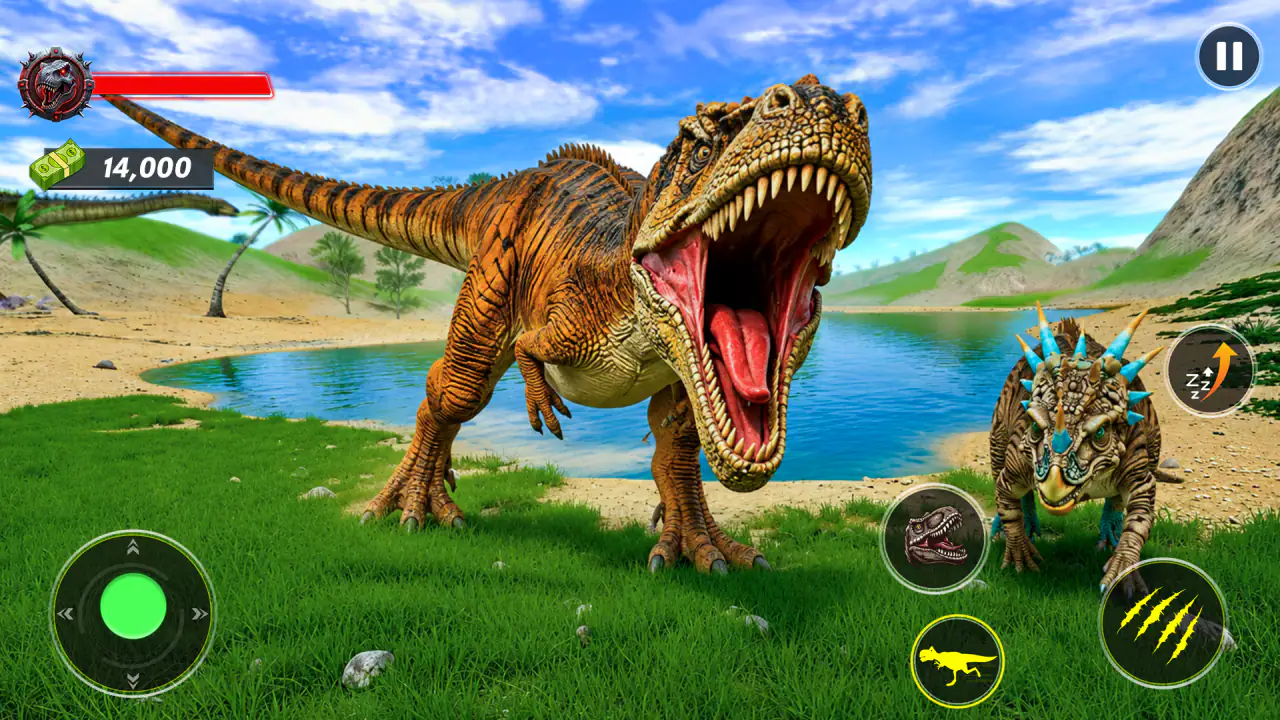
This is also where the game differs from a traditional dinosaur action title. I am not primarily controlling a dinosaur through a large story-driven world. The focus is on managing progression through combinations and evolution. Players looking for exploration, direct combat, or a cinematic Jurassic adventure may find the format more structured and menu-driven than expected.
Setup checks that help on Android
The game supports Android 7.0 and newer, so compatibility should be straightforward for many devices. Before blaming the game for a problem, I would first check that the phone is using a supported Android version and that the installation has completed properly. A partially completed installation or a device with very little free storage can create symptoms that look like an in-game failure.
My basic setup routine is simple. I make sure the device has enough available space, close demanding apps running in the background, and restart the game after installation rather than leaving it suspended in the recent-apps screen. These steps are not special tricks for this title, but they are sensible ways to remove avoidable friction before judging performance.
If the game opens but behaves strangely, I would first close and reopen it. If that does not help, restarting the device is the next reasonable step. I would avoid repeatedly clearing app data unless I understand what that action may remove, because a reset can affect local progress or settings. A cautious player should treat data-clearing as a later troubleshooting option, not the first response.
Connection-related trouble also deserves a basic check. If an action appears to stall, I would switch between a reliable Wi-Fi connection and mobile data, then try again. I would not assume every pause means the game itself is broken. Temporary network instability, background downloads, or a device changing connections can all interrupt an online-dependent action.
Handling purchases carefully
Optional purchases are available inside the game, with individual items priced from $2.99 to $9.99. I would keep that in mind before handing the phone to a child, even though the content rating is Everyone 10+. The age rating describes suitability, but it does not remove the need for purchase controls on the device.
My advice is to play long enough to understand the normal progression before buying anything. If a purchase appears to solve a slowdown, I first ask whether I am actually blocked or simply being encouraged to wait and manage resources. That distinction matters in a free game. Spending can be reasonable for someone who already enjoys the loop, but it is poor value if I am still unsure whether I like the basic activity.
I also keep purchase decisions separate from troubleshooting. If a dinosaur does not appear, a merge does not register, or progress seems delayed, buying an item is not a reliable fix. I would restart the game, review the current objective, and check the connection before treating payment as an answer.
Recovering when progress or actions feel stuck
Merge games can make a player wonder whether an action failed when the real issue is that the required pieces are not the ones currently selected. When something does not happen, I go back to the objective and inspect the items carefully. I check whether the creatures truly match, whether the game is asking for a different combination, and whether I have completed the preceding step.
This is one of the most useful habits I developed with the game: I slow down when an action seems unresponsive. Rapid tapping can make it harder to tell whether I selected the wrong item or whether the interface simply needs a moment. I also avoid making several unrelated changes at once. Testing one action, observing the result, and then continuing gives me a clearer picture of what happened.
If the screen appears frozen, I close the game normally and reopen it. If the same issue returns, I restart the phone and try again under a stable connection. I would not uninstall immediately, especially if I care about current progress. Reinstallation can be a last resort, but I would first consider whether the game’s progress is safely associated with anything beyond the local installation. Since I cannot assume how every save situation works, caution is better than losing a collection I have built.
A second recovery technique is to return to the simplest available action. Instead of trying to force a complicated evolution, I look for a basic merge or an unclaimed reward that may advance the current sequence. This helps distinguish a genuine technical problem from a progression misunderstanding. It also keeps the session moving without turning every small obstacle into a reason to quit.
Using a small plan instead of merging blindly
My preferred workflow is to scan the available dinosaurs first, decide which combination is most likely to advance the current goal, and only then perform the merge. Afterward, I check what changed before making another move. This takes a few extra seconds, but it reduces accidental combinations and makes the game feel less chaotic.
I also try to keep a mental record of what I was doing before an interruption. If the game closes or the phone loses connection, I reopen it and check whether the last action completed before repeating anything. Repeating a merge without checking can lead to confusion about whether resources were consumed once or twice. A calm recovery process is especially useful during short sessions when I return to the game after a notification or phone call.
Another practical trade-off is session length. Short sessions work well for checking the current collection and completing a few straightforward actions. Longer sessions may be more satisfying when I am close to an evolution, but they also make repetition more noticeable. I would use short play periods to test the game and reserve longer ones for moments when the progression genuinely holds my attention.
When the game may not be the real problem
Not every disappointing moment comes from a software fault. A phone with aggressive background management may suspend a game, a weak connection may interrupt an action, and a crowded device may respond slowly. Before deciding that Real Jurassic Dino Revolt is unreliable, I would compare what happens after a clean restart and a stable connection.
It is also possible to mistake expected game design for malfunction. A slower progression step, a requirement to collect more pieces, or a need to repeat a merge can feel like the game has stopped rewarding progress. In a collection-focused adventure game, however, gradual improvement is part of the structure. The important question is whether I still enjoy the decisions involved, not whether every action produces a dramatic change.
Notifications and interruptions can create their own confusion. If I leave the game during a transition, return through the recent-apps menu, and see an unchanged screen, I do not immediately repeat the last action. I reopen it cleanly and inspect the collection first. This simple sequence avoids turning an ordinary interruption into an apparent loss of progress.
Players should also consider the device itself. The minimum operating-system requirement is Android 7.0, but meeting that requirement alone does not guarantee an identical experience on every phone. Older hardware, limited free storage, or many background processes can affect how smoothly any game behaves. If other demanding apps are also slow, the wider device environment is a more likely suspect than this particular dinosaur game.
Who will enjoy the format
I think the game suits players who like visible collection goals, gradual evolution, and simple decisions that build toward stronger dinosaurs. It can work well as a casual break during a commute or while waiting for an appointment. I can open it, make a few planned combinations, and stop without needing to remember a complicated control layout.
It is also a reasonable choice for younger players within the stated age guidance when an adult has handled purchase settings appropriately. The prehistoric theme is easy to understand, and the core idea does not require knowledge of a large fictional universe. Still, the free-to-play structure means adults should explain that optional items cost real money before allowing independent play.
I would recommend skipping it if I want a deep story, open exploration, detailed combat, or a highly competitive multiplayer experience. A traditional action-adventure game will offer more direct control and probably a stronger sense of place. A pure puzzle game may be better for someone who wants the merge mechanic without the dinosaur-collection framing. This title is best when the act of building a prehistoric roster is itself the main attraction.
How it compares with familiar alternatives
Compared with dinosaur survival games, this one is less demanding in terms of movement, combat, and environmental navigation. I am not choosing it for a large world to explore; I am choosing it for a more contained progression loop. That makes it easier to play casually, but it also means there is less variety for anyone who needs constant changes in activity.
Compared with standard match or merge puzzles, the dinosaur theme gives the progression a clearer identity. Evolving a prehistoric creature feels more memorable than combining anonymous shapes, especially when I am motivated by completing a collection. The trade-off is that players who prefer pure puzzle efficiency may find the adventure framing slower than a focused puzzle board.
It also differs from idle games because the central appeal is not simply watching numbers rise in the background. I get more satisfaction when I pay attention to the available combinations and choose the next move deliberately. If I want a game that requires almost no interaction, this may feel too hands-on. If I want a game that demands constant reflexes, it may feel too relaxed.
The rating of 3.9 from around 247 ratings fits my impression of a game with a recognizable hook but some limits in depth and polish. It has enough personality to stand apart from a generic merge title, yet the basic loop will not satisfy everyone for a long time. The fact that it has passed 100,000 installs shows that the concept has found an audience, but popularity alone should not decide whether it belongs on my phone.
My practical verdict after testing the routine
Real Jurassic Dino Revolt works best when I approach it as a casual dinosaur collection game rather than a full-scale Jurassic adventure. Its strongest quality is the clarity of its central loop: combine creatures, improve them, and keep building toward the next stage. That simplicity makes it accessible, especially for short sessions and players who enjoy visible progress.
Its main weakness is equally clear. Once the novelty of the prehistoric theme settles, the enjoyment depends on how much I like repeating merge decisions and managing gradual advancement. Anyone expecting extensive exploration or action may feel underwhelmed. Optional purchases also mean I would play normally first and treat spending as a personal choice, not a requirement for solving every obstacle.
For a realistic everyday use, I would keep it as a small break game: open it when I have a few minutes, review the available dinosaurs, make one or two purposeful combinations, and leave before the repetition becomes tiring. If an action seems stuck, I would check the objective, confirm the selected pieces, restart the game, and test the connection before taking more drastic steps.
My final recommendation is cautiously positive. I would suggest it to someone who likes approachable adventure games with a merge-and-evolve structure and a strong dinosaur theme. I would not recommend it to a player seeking a story-heavy or action-focused prehistoric experience. The free entry point makes testing easy, and the current version, 1.12, gives interested players a straightforward way to decide for themselves whether the collection loop has enough staying power.
FAQs for Real Jurassic Dino Revolt Game
What is Real Jurassic Dino Revolt Game about?
Real Jurassic Dino Revolt Game is a dinosaur-themed action and survival experience in which players explore prehistoric environments, encounter powerful dinosaurs, and complete challenges while trying to stay alive. The game focuses on adventure, combat, exploration, and progression. Depending on the mode and mission, you may need to hunt, defend yourself, collect resources, or overcome increasingly difficult dinosaur encounters.
Can I play Real Jurassic Dino Revolt Game offline?
The game may allow some features to work without an internet connection, particularly basic single-player missions or previously loaded content. However, online access can be required for advertisements, updates, cloud saves, rewards, leaderboards, or other connected features. Before downloading, it is worth checking the store description and testing the game in offline mode, since available functionality can vary between Android and iOS versions.
Is Real Jurassic Dino Revolt Game suitable for children?
Real Jurassic Dino Revolt Game is generally aimed at players who enjoy dinosaur action and arcade-style combat, but parents should review its age rating before installation. The game may include frightening creatures, battles, weapons, crashes, advertisements, or in-app purchases. Younger players may also need supervision if the app offers optional purchases or online features, even when the gameplay itself is relatively simple.
Does Real Jurassic Dino Revolt Game include in-app purchases or advertisements?
The game can include advertising and optional in-app purchases, as is common with many free-to-download mobile games. Ads may appear between missions or when claiming bonus rewards, while purchases could provide currency, upgrades, characters, weapons, or faster progression. Check the official app-store listing for the current details, and consider enabling purchase restrictions if children use the device.
What devices are required to run Real Jurassic Dino Revolt Game smoothly?
Real Jurassic Dino Revolt Game should run best on a relatively recent Android phone, tablet, iPhone, or iPad with enough free storage and updated operating-system support. Dinosaur graphics and action effects may require more processing power than simple casual games. Older or entry-level devices could experience slower loading, reduced visual quality, overheating, or occasional crashes, so verify compatibility in the official store before downloading.
Pros
- Exciting dinosaur battles with a wide variety of prehistoric creatures.
- Simple controls make the game accessible for younger players.
- Short missions are convenient for quick gaming sessions.
- Unlockable dinosaurs provide a clear sense of progression.
- Colorful 3D environments make the prehistoric setting enjoyable.
Cons
- Frequent ads may interrupt gameplay
- especially between missions.
- Some dinosaurs and upgrades require considerable grinding to unlock.
- Combat can become repetitive after playing for several hours.
- Device performance may suffer on older phones or tablets.
- The game may encourage in-app purchases for faster progression.


